THE R.I.C.E. FALLACY: HOW ARCHAIC ACUTE-CARE ATROPHIES YOUR CONNECTIVE TISSUE AND BIOMECHANICAL BLUEPRINT
Author: Darryl M. Perrilloux, CSCS | Clinical Systems Architect, Perrilloux Performance
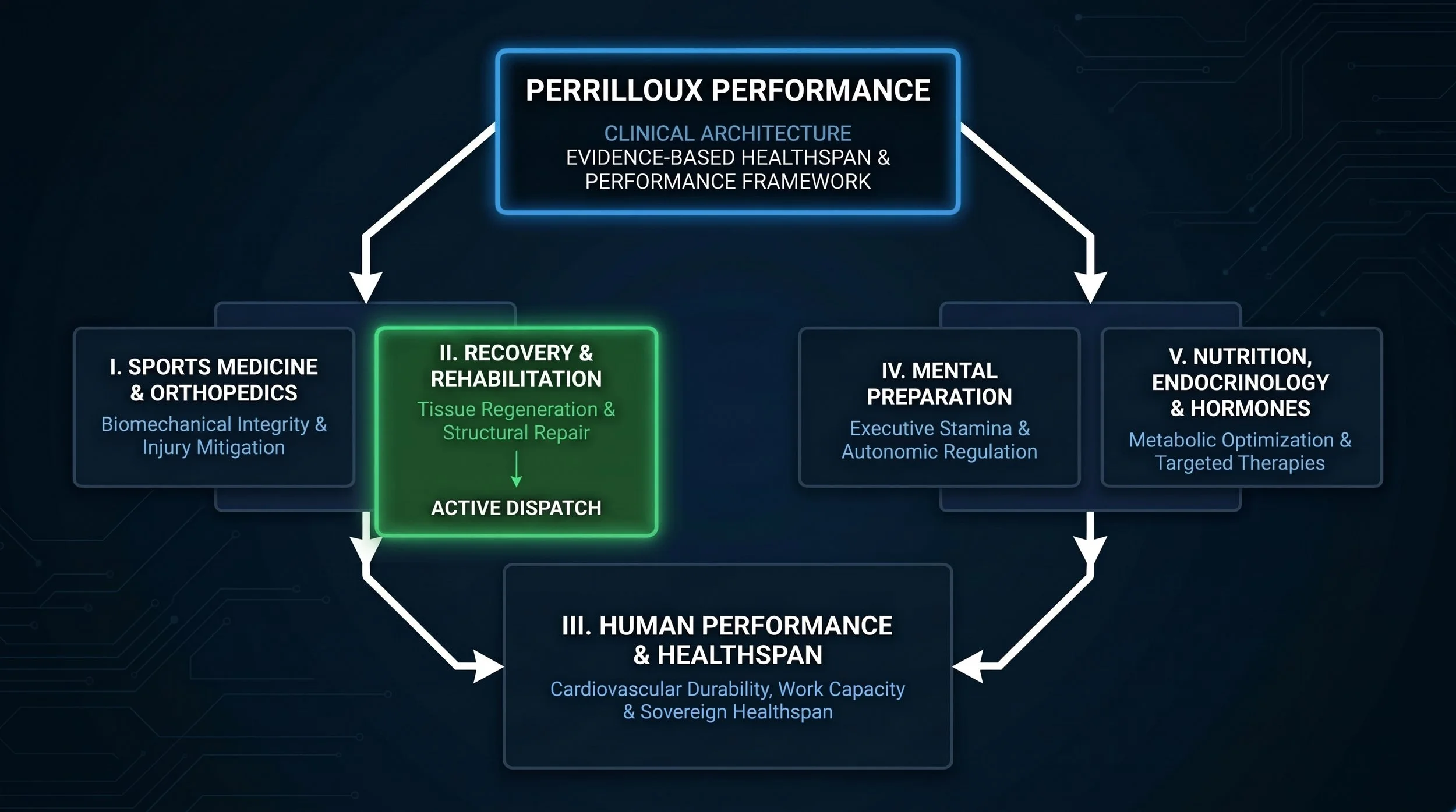
Clinical Pillar: Pillar II: Recovery & Rehabilitation & Pillar V: Nutrition, Endocrinology & Hormones
Category: Applied Healthspan / Structural Durability & Mechanobiology
Reading Time: 14 Minutes
In high-performance environments, downtime is lethal. Yet, when a high-performance professional or elite athlete suffers from a nagging chronic injury (such as Achilles tendinopathy) or an acute soft-tissue strain, the standard medical reflex is to rely on an archaic protocol: R.I.C.E. (Rest, Ice, Compression, Elevation).
For years, remedial acute care offered two options for addressing damaged tissue: total loading of the affected area through training, or total immobilization through rest. Complete resting and the use of ice were considered best practices. However, modern mechanical biology shows that complete rest for minor and chronic soft-tissue injuries is ineffective at promoting tissue repair and recovery and can have detrimental effects on overall metabolic health.
(Not included in this framework are acute catastrophic musculoskeletal system failures, such as severe structural failures like full tendon rupture, compound fracture, etc., requiring prompt surgical and specialty orthopedic care.)
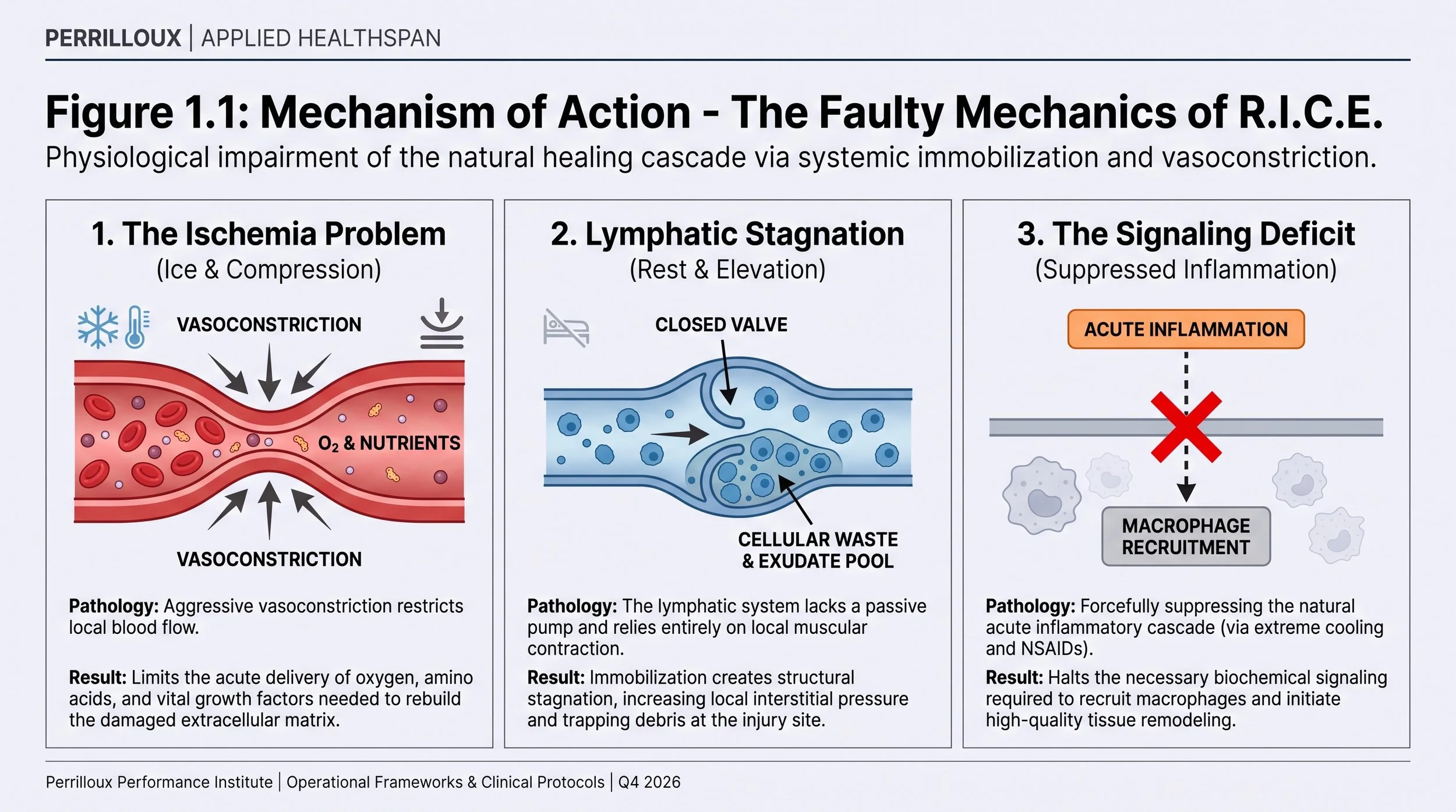
Mechanism of Action: The Faulty Mechanics of R.I.C.E.
The failure of legacy frameworks can be attributed to the manner in which their physiological assumptions are interfering with the natural course of the healing process:
• The Ischemia Problem (Ice & Compression): Intense vasoconstrictive response will severely limit the early blood flow delivery of oxygen, essential amino acids, and other critical growth factors required for rebuilding the damaged extracellular matrix.
• The Lymphatic Stagnation Issue (Rest & Elevation): There is no passive pumping mechanism for the lymphatic system. Therefore, it depends on local muscle contractions to remove debris, cellular waste, and exudate from an injury site. Immobilization leads to stagnation of this structure at the injury site and increased interstitial pressure there.
• The Signaling Deficit: Forced suppression of the normal acute inflammatory cascade results in cessation of the chemical signaling cascades necessary for recruiting macrophages for high-quality tissue repair.
The True Physiology of Adaptive Recovery
The repair of your biological structure isn't accomplished by rest alone. Rather, it occurs through a cellular process referred to as Mechanotransduction. This is the physiological process by which cells convert mechanical force into a biochemical response.
When you stretch a ligament or develop chronic tendonitis, your body uses fibroblasts (the building blocks of connective tissue) and osteocytes to build additional structural protein. Fibroblasts don't see where the damage has occurred with their eyes. The mechanical tension and deformations produced from movement are the only signals these cells receive regarding where and how to orient the new structural matrix.
If you completely immobilize a joint, you eliminate the cells' operating instructions. As a result, the cells will randomly produce collagen, resulting in weak, stiff, and easily injured scar tissue. To properly heal, tissue needs to be loaded. The tissue needs Mechanotherapy.
The Clinical & Economic Hazard: The Immobilization Trap
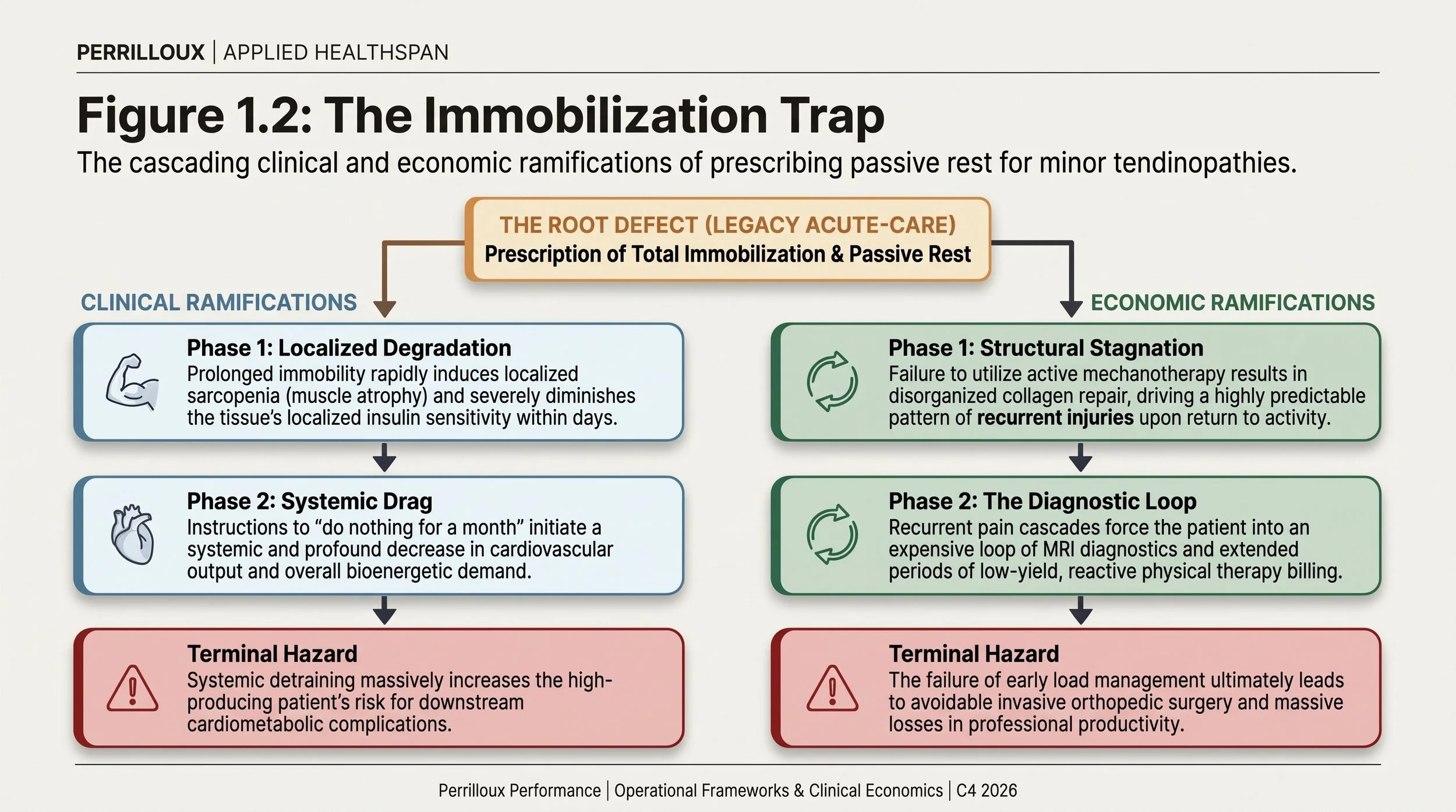
A healthcare professional's decision to prescribe passive rest for a minor injury to a patient will lead to myriad long-term clinical and economic ramifications.
Prolonged immobilization can cause localized muscle atrophy (sarcopenia) and diminish the body's insulin sensitivity in just a few short days. Thus, when a high-producing professional is sent home with instructions from a doctor such as “don’t do anything for a month,” this action initiates a systemic decrease in cardiovascular output. This, in turn, increases the patient’s risk of developing downstream cardiometabolic complications.
Mismanagement of tendinopathy is a major contributor to lost time/lost productivity and avoidable surgery interventions. The failure of physicians to utilize an active-load-based treatment plan instead of simply telling the patient to rest passively results in a pattern of recurrent injuries. Ultimately, this leads to MRI diagnostics, extended periods of physical therapy billing, and invasive orthopedic procedures, which could easily have been prevented with timely mechanotherapy.
The Perrilloux Protocol: Synthetic Mechanics & Decoupled Conditioning
At Perrilloux Performance, when an individual has suffered damage to their biological framework, the damage must be capable of healing; however, the metabolic engine must continue to operate. Traditional methods for dealing with injuries — such as practicing passive joint avoidance during low-impact cardio — simply allow athletes to reduce the stress placed on their injured limbs by engaging in repetitive, poorly managed kinetic cycles.
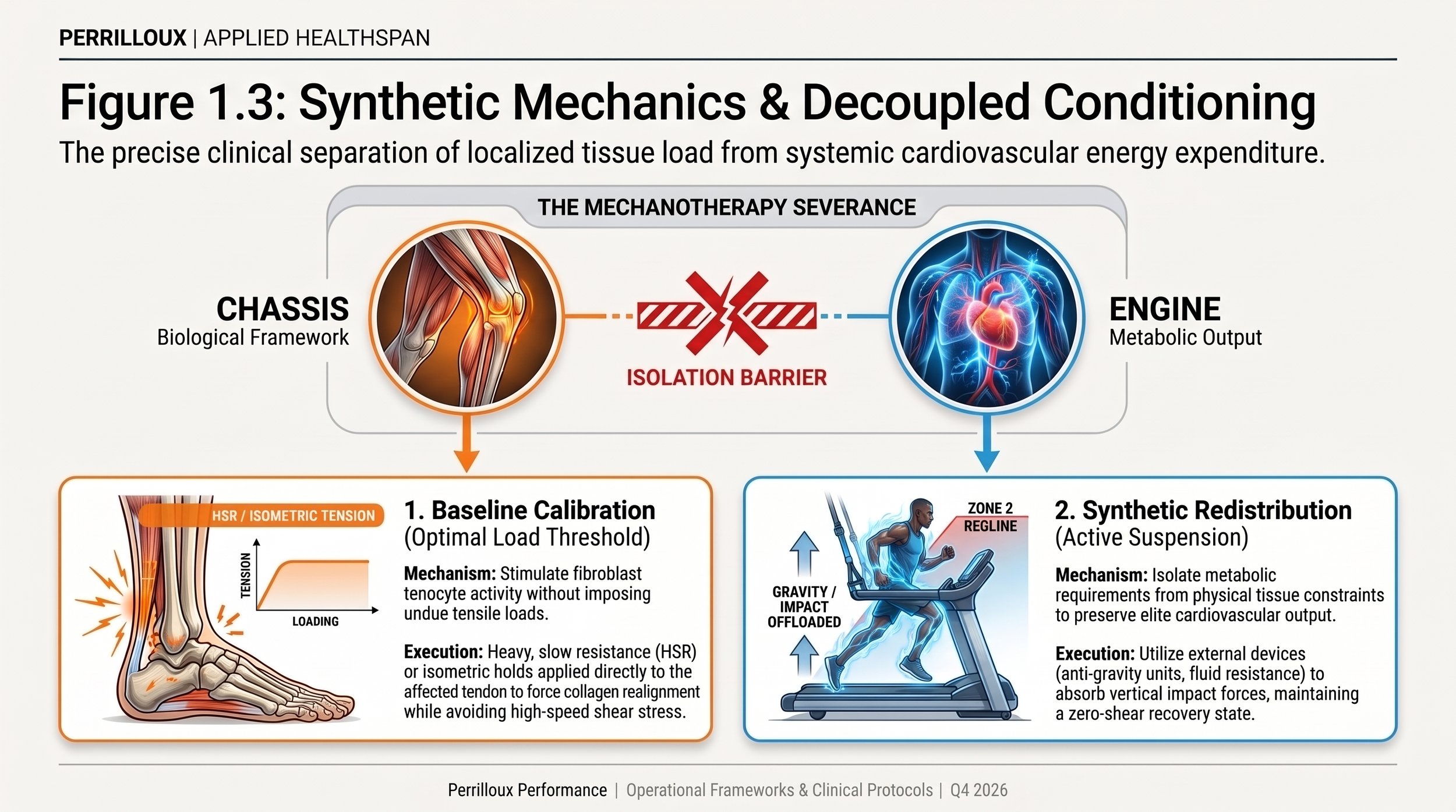
Instead, we prefer to develop a methodology for translating the principles of mechanotherapy into a highly specialized program we call Synthetic Mechanics (i.e., the precise separation of localized tissue load from systemic cardiovascular energy expenditure). Through this methodology, we can isolate an athlete's metabolic requirements from those related to the physical constraints imposed by injury.
1. Baseline calibration (Optimal Load Threshold):
Our goal is to avoid causing structural pain. Instead, we focus on developing a range of mechanical tension to stimulate fibroblast tenocyte activity without imposing undue tensile loads on the damaged tissues. To accomplish this objective, we use heavy, slow resistance (HSR) or isometric holds and apply them directly to the affected tendon(s), thereby stimulating collagen realignment and avoiding the shear stresses associated with high-speed movements.
2. Synthetic load redistribution (Active Suspension):
To preserve elite levels of metabolic conditioning and maintain cardiovascular output in Zone 2 while treating lower-body injuries, we use both biomechanics and technology to create an offloading environment. As in the active suspension systems used in F1 vehicle design, we use external devices such as air-pressure chambers, anti-gravity suspension units, or variable fluid resistance to absorb the vertical impact forces caused by gravitational pull. Therefore, we can redline the bioenergetic engine while maintaining the structural matrix in a well-controlled state of zero-shear recovery.
Pillar V Integration: Fueling the Structural Engine
Mechanical load cannot be effective without raw materials. Perrilloux Performance has translated the clinical data on connective tissue synthesis through controlled biochemical and nutritional interventions, precisely timed to coincide with applied mechanical stress.
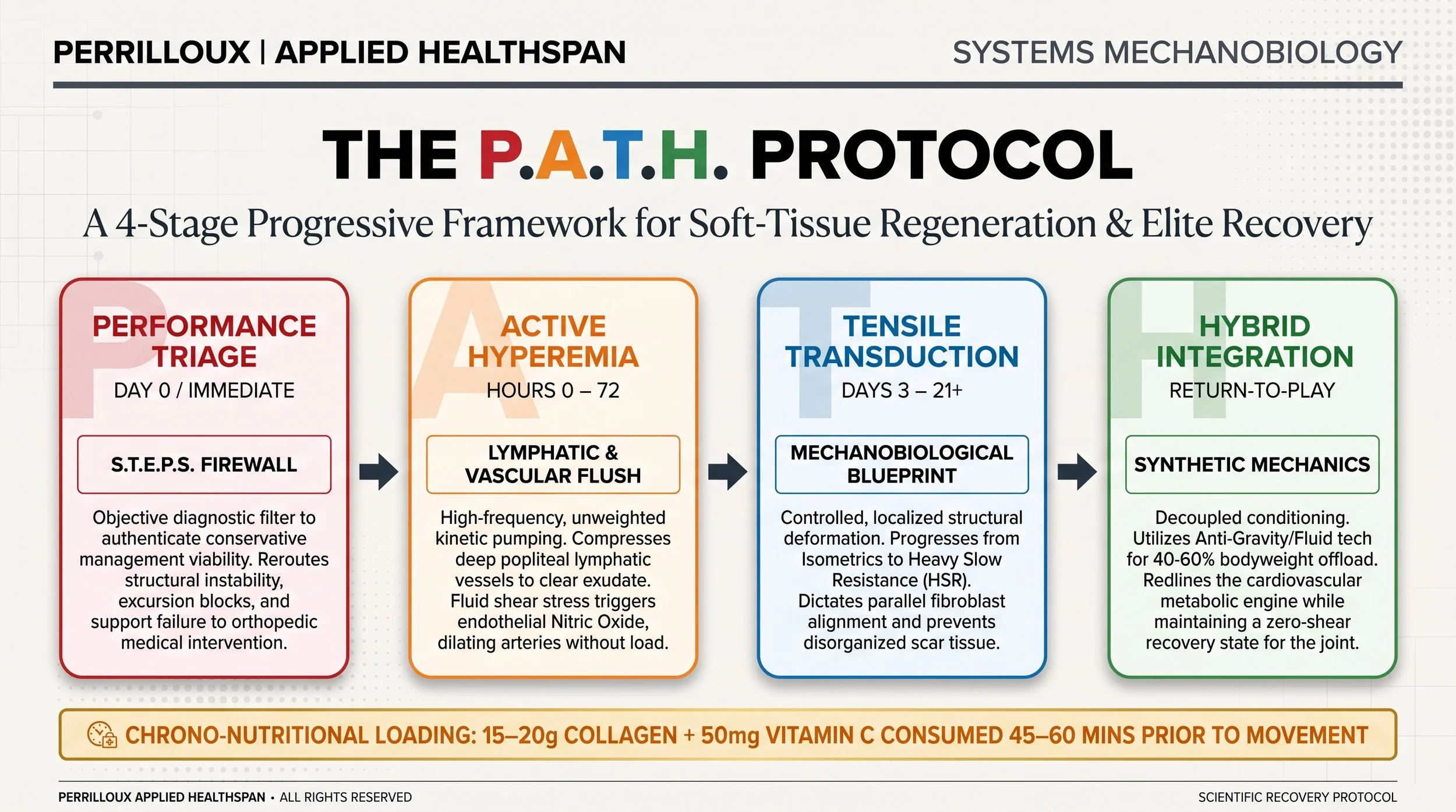
• The Substrate: 15-20g of hydrolyzed collagen that contains rich amounts of the rate-limiting amino acids: glycine, proline, and hydroxyproline paired with 50 mg of vitamin C. Vitamin C is an essential cofactor for collagen crosslinking and stability of the triple helix structure.
• The Electrolyte Driver: To optimize our hydration matrix, we ingest 500 mg of sodium and 200 mg of potassium. Because tendons and ligaments have a very limited blood supply, their ability to absorb the necessary elements relies heavily on osmosis and hydrostatic pressure. Therefore, it is crucial to maximize cell water content before mechanical deformation to maximize these diffusion processes.
• The Chrono-Nutrition Timing: We take the entire stack of supplements 45 to 60 minutes prior to the Synthetic Mechanics protocol. By doing so, we ensure that serum amino acid levels peak at approximately the same time as the fibroblasts experience maximum deformation under mechanical forces, thereby optimizing the cells' ability to take up nutrients and synthesize new structures.
Perrilloux Framework: The P.A.T.H. Protocol
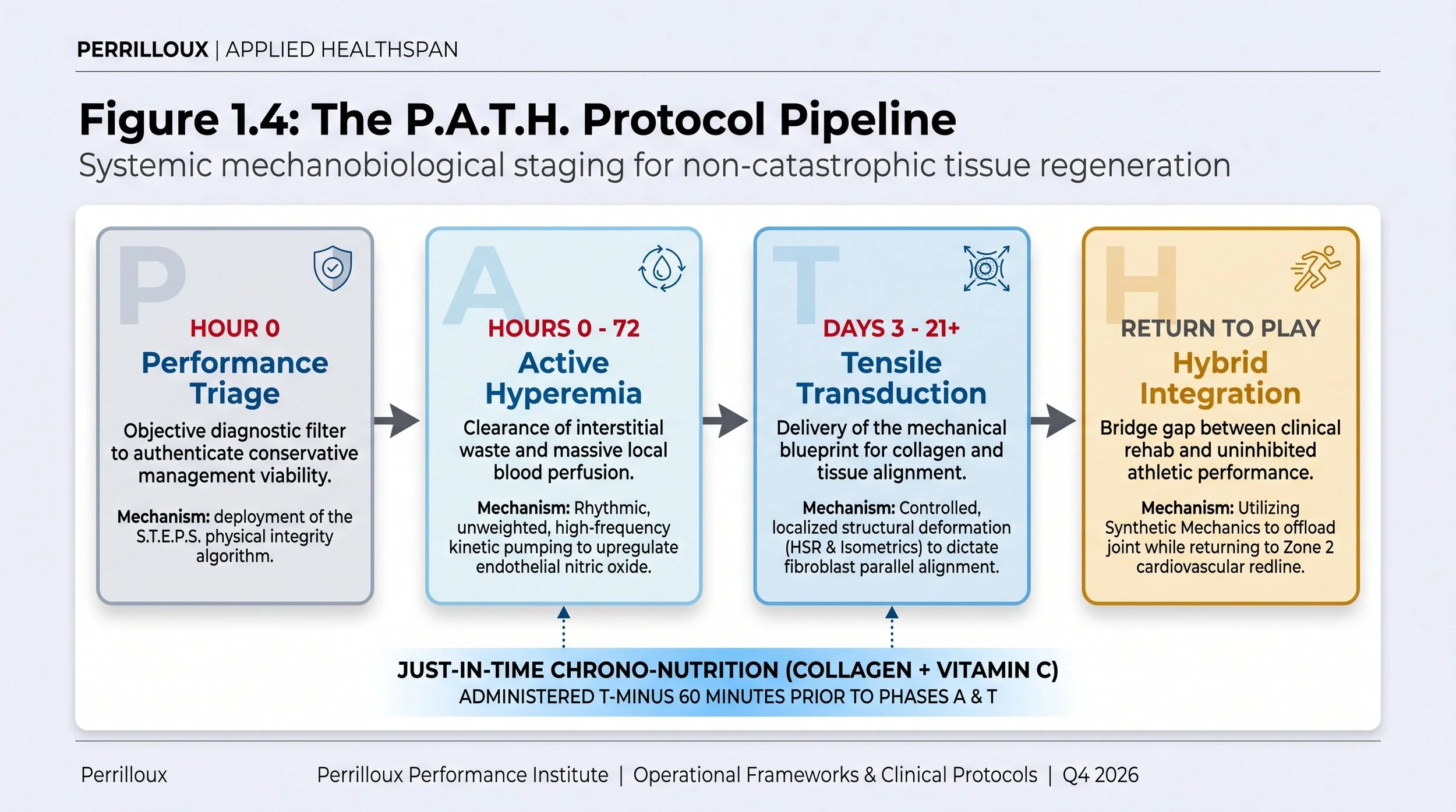
We replace the passivity of R.I.C.E. with The P.A.T.H. Protocol, a proactive system designed to guide the individual along a structured, active path back to normal functioning while protecting professional scope boundaries.
P – Performance Triage
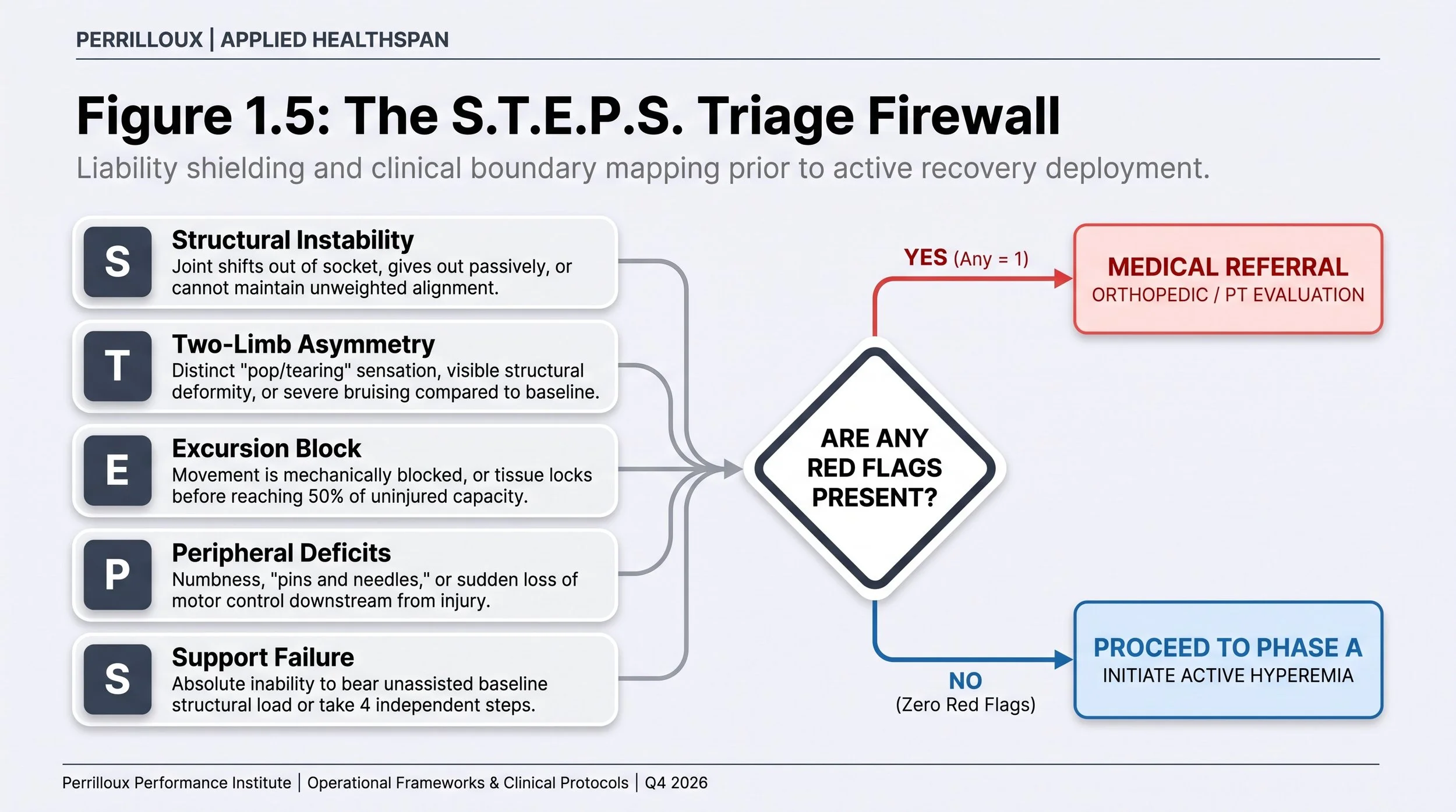
Before any training or active loading takes place, the individual must pass a strict triage filter called the S.T.E.P.S. Self-Test to differentiate performance-led recovery from conditions requiring medical management:
S – Structural Instability: The joint feels loose, shifts abnormally out of its socket, gives out under passive movement, or cannot maintain its basic alignment under unweighted testing.
T – Two-Limb Asymmetry: A distinct "pop" or "tearing" sound or sensation felt at the exact moment of onset, or visible structural deformity, severe bruising, and pronounced asymmetry when compared directly to the uninjured side.
E – Excursion Block: An active range of motion check where the individual attempts to move the joint or spine using only their own muscle power. If movement is mechanically blocked or if pain completely locks the tissue before it reaches 50% of standard uninjured capacity, stop immediately.
P – Peripheral Deficits: The presence of neurological markers downstream from the injury site, including numbness, tingling, a radiating "pins and needles" sensation, or a sudden loss of motor control (such as an inability to grip, foot drop, or a sudden loss of bowel/bladder control in spinal cases).
S – Support Failure (The Axial & Extremity Load Test): An absolute inability of the injured structure to bear its baseline, unassisted structural load immediately following trauma or during chronic testing.
Lower-Limb: An absolute inability to take four independent, unassisted steps during the triage check.
Upper Extremity (Arms & Shoulders): An absolute inability to support body weight or sustain a light push-away movement (e.g., a modified wall-press or quadrupedal hand-support check) without sudden collapse or high-intensity structural pain.
Core & Spine (Waist, Thoracic, & Cervical): An absolute inability to maintain an upright, unsupported seated posture or execute a gentle, unweighted trunk rotation without mechanical collapse or severe, protective muscle guarding that locks the torso.
The Chronic Escalation Red Flags: For preexisting, non-acute overuse issues, an immediate medical referral to an Orthopedist or Physical Therapist is required if the client exhibits:
Stalled Progression: Symptoms that fail to improve or actively worsen after 4 to 6 weeks of consistent, targeted mechanotherapy.
Night Pain: Persistent, throbbing pain that wakes the individual from sleep or prevents them from resting on the affected side.
Compensatory Pathology: Migrating pain or secondary joint strains caused by chronic kinetic chain alterations.
If any S.T.E.P.S. or chronic escalation red flags are present, immediate referral to a medical professional is mandatory. If the individual passes all metrics of the self-test, they safely proceed along the active performance recovery path.
A – Active Hyperemia (Timeline: Hours 0–72)
Replacing passive rest and vasoconstrictive ice, we intentionally stimulate localized blood flow and manual lymphatic drainage. This is achieved through Synthetic Mechanics using non-painful, high-frequency, ultra-low-load muscle pumping.
Mechanical Execution: The individual performs rhythmic, repetitive contractions of the muscle bellies surrounding and spanning the affected area. The movement must be entirely non-provocative, utilizing minimal structural resistance.
Physiological Impact: This action acts as a mechanical pump on the deep lymphatic valves, clearing metabolic waste. Simultaneously, it induces shear stress on the vascular endothelium, releasing nitric oxide to dilate local vessels and flood the cellular matrix with oxygenated blood.
T – Tensile Transduction (Timeline: Days 3–21+)
Once the matrix is cleared and perfused, we introduce safe, localized physical deformation to provide the mechanical blueprint that tissue requires to rebuild correctly. Loading inputs are customized based on the specific target connective tissue:
Myotendinous Junctions & Tendons (Tensile Loading): Tendons require predictable, high-tension inputs to stimulate tenocyte collagen synthesis. This is achieved through a progression from controlled, zero-movement positional holds (isometrics) to heavy, slow-resistance (HSR) overloads. This targeted stress prevents disorganized scar tissue and forces collagen fibers to align parallel to the line of pull.
Ligaments (Multi-Planar Shearing & Stability): Ligaments protect joint boundaries. We introduce light, multi-directional vectors and joint-positional-awareness challenges that gently stress the tissue at various angles, thereby restoring mechanoreceptors responsible for spatial awareness.
Muscle Bellies (Excursion & Shear Stress): Muscle tissue requires a restoration of sliding mechanics. We utilize full-range, unweighted spatial movements to ensure regenerating muscle fibers do not adhere to surrounding fascial sheets, maintaining tissue elasticity.
H – Hybrid Integration (Timeline: Return-to-Play Continuum)
This phase bridges the gap between clinical rehabilitation and baseline athletic performance. For clients transitioning post-discharge from an Orthopedist or Physical Therapist, Perrilloux Performance operates as the continuum of care.
Coordinated Care: Ideally, this phase is informed by direct communication and shared limitations from the client's clinical providers.
Autodidactic Progression: In the absence of external clinical communication, the coach utilizes advanced mechanobiological judgment and client-reported experiential boundaries to safely scale tissue threshold tolerances. We safely graduate the tissue from low-level movement back to exceeding the Minimum Essential Strain (MES) threshold using technological off-loading (e.g., anti-gravity environments, aquatic resistance, or altered load redistribution) to maintain Zone 2 cardiovascular output safely while loading the structural chassis.
Practical Case Study: Acute Knee Strain Recovery in Action
To illustrate the P.A.T.H. Protocol in practice, we will evaluate a highly competitive athlete who has experienced an acute non-severe injury to the knee (i.e., mild patella tendon and medial collateral ligament) that results from a low-grade strain. Following completion of the S.T.E.P.S. Self Test, the same athlete can use a squat modification to measure structural tolerance.
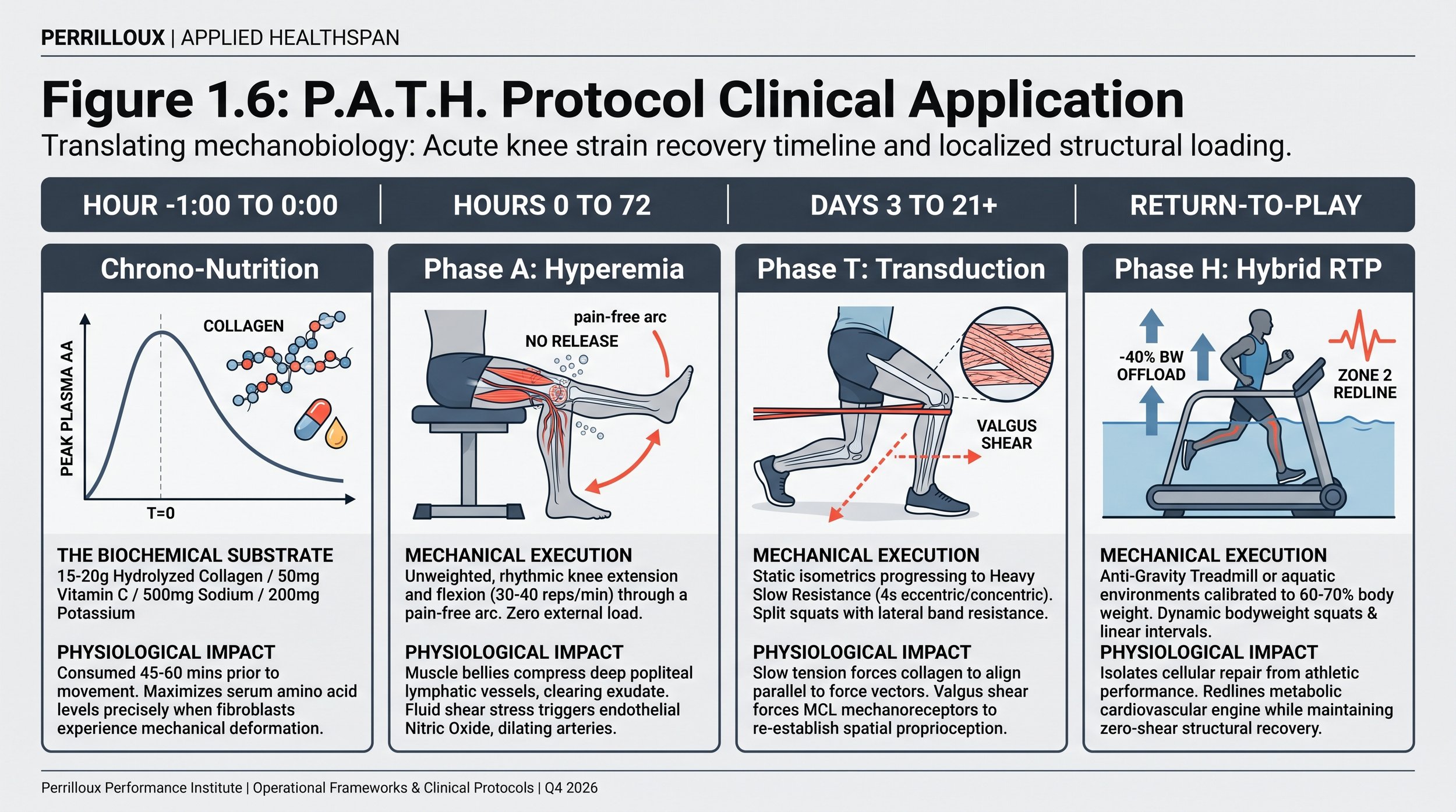
Chrono-Nutritional Loading (- Hour -1:00 to -0:45)
Approximately 45–60 minutes before initiating movement, the client consumes 15–20 g of hydrolyzed collagen, along with 50 mg of vitamin C, 500 mg of sodium, and 200 mg of potassium, in 16 oz of water. By the time the protocol starts, the athletes' blood plasma amino acid levels are at peak levels to coincide with the impending mechanical stress on their fibroblasts.
Phase A: Active Hyperemia (Hours 0 – 72)
• Mechanical Execution: the client is positioned sitting on a raised platform with their legs hanging free. High frequency (30-40 times/min) passive, un-weighted rhythmic extension and flexion of the knee (leg swings from a-to-B), as long as it does not cause pain. There are no bands or weights added during this phase.
• Physiological Impact: The rhythmic motion causes compression of the deep popliteal lymphatic vessels by the muscle bellies of the quadriceps and hamstrings, creating a mechanical clearing action for fluids that have collected within the knee capsule. The friction-free motion continues to generate fluid shear stress throughout the local vasculature, thereby stimulating endothelial cells to produce nitric oxide. This dilation of the genicular arteries floods the traumatized knee matrix with a high concentration of oxygen-rich, nutrient-dense blood, while avoiding mechanical loading of the joint.
Phase T: Tensile Transduction (Day 3 – 21+)
Once swelling has resolved, a gradual systematic application of targeted mechanical stresses is applied to the involved injured tissues as the client progresses through a functional squat:
• Patellar Tendon (Tensile Loading):
Step 1 (isometric): The client will perform a static Wall Sit Hold or a static Spanish Squat Hold with the knees bent at an angle that creates no pain (typically 45–60°) and will be required to maintain this static position for 45 seconds at maximum intensity. Repeat for 4–5 sets. Cortical inhibition (via pain reduction) and tenocyte collagen synthesis (stimulation) occur during this phase.
Step 2 (Heavy, Slow Resistance - HSR):
Upon completing pain-free isometric holds, the client can transition to performing a heavy Leg Press or Goblet Squat. Client is instructed to perform each repetition slowly, but consistently at a rate of 4 seconds eccentric (lowering) followed by 4 seconds concentric (rising). Due to the slow, consistent tension on these newly formed collagen fibers, they lie parallel to the lines of force and do not form disorganized "scar" tissue.
• MCL & Ligaments (Multi-Planar Shearing & Stability):
Client performs a Split Squat while maintaining a light lateral resistance band attached to their lower extremity that causes their knee to move inward (valgus stress). The client must actively work against the band’s resistance to keep the knee straight ahead. Controlled multi-planar shear stress is introduced in addition to the existing shear stress, causing the mechanoreceptors within the ligament to fire and re-establish spatial awareness (proprioception).
• Muscle Bellies (Excursion & Sliding Mechanics):
Client performs full range heel slides without weight and low-level bodyweight box squats to just below the pain threshold. Full range excursions and sliding mechanisms against surrounding fascial layers are maintained by the developing muscle belly. This prevents protective stiffening/guarding.
Phase H: Hybrid Integration (Timeline: Return-to-Play Continuum)
• Mechanical Process: The client will transition to an Anti-Gravity Treadmill (or aquatic resistance environment) calibrated to 60–70% of their actual body weight. While in this artificial condition, the client will be coached to perform deep, dynamic bodyweight squats and linear training intervals under direct supervision, with telemetry recording normal biomechanical processes and no visible swelling or pain. Once those two parameters are met, the client will begin returning to a full-weighted, traditional barbell squat program for a multi-week period.
• Physiologic Response: This phase is designed to connect the process of local cellular repair with the ability to produce intense athletic performance. With artificially absorbed vertical ground reaction forces, we remove harmful effects from both joint shear & micro-trauma caused by complex kinetic movements. Therefore, the client can safely utilize high-velocity muscle contraction and redline their zone 2 cardiovascular output while maintaining elite endurance of the metabolic engine. At the same time, the gradual return to standard gravity will cause the reconstructed knee architecture to surpass Frost’s Minimum Essential Strain (MES), which in turn causes structural adaptation and returns to baseline operational Dominance.
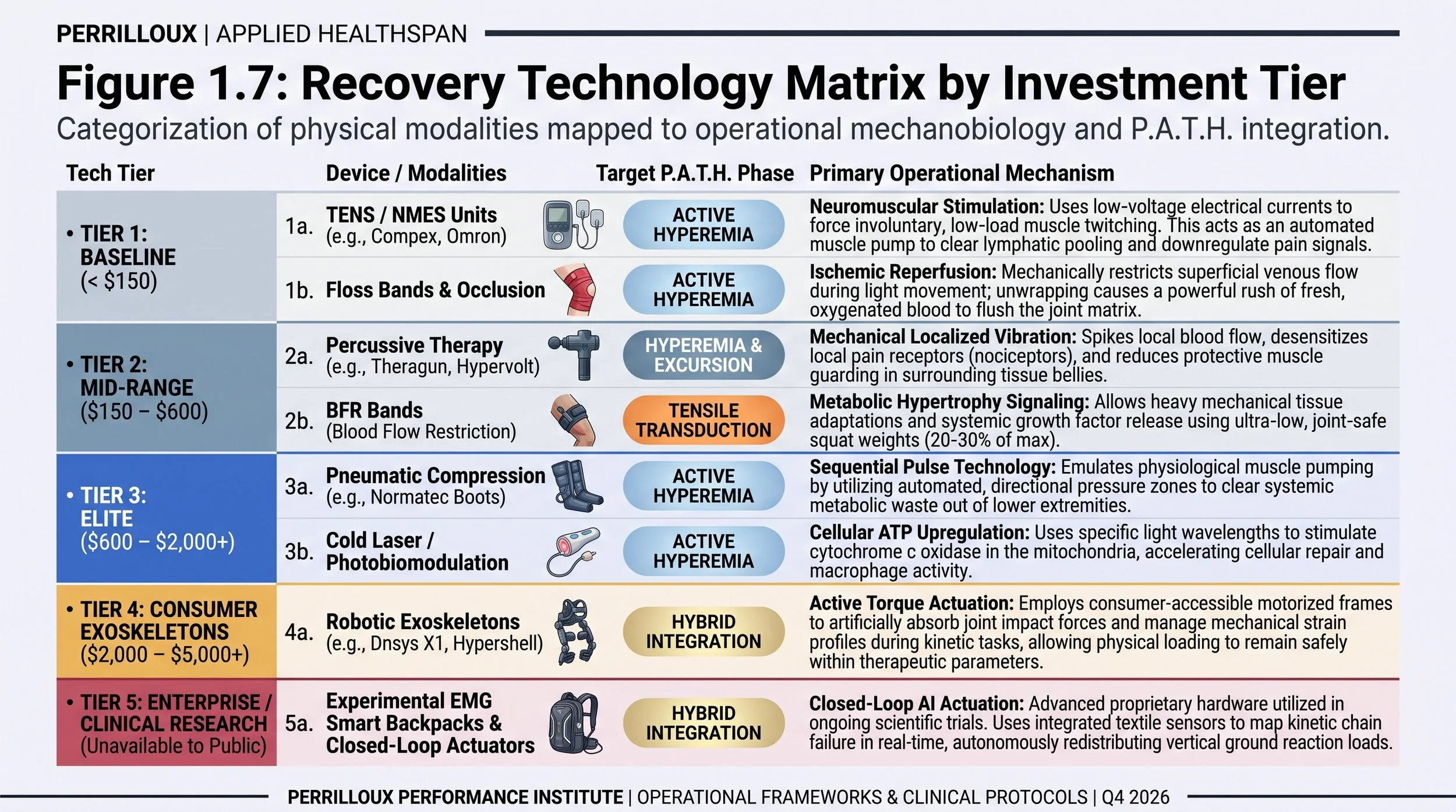
Recovery Technology Matrix by Investment Tier
To augment this physiological programming, accessible therapeutic modalities can be introduced based on budget, with each mapped directly to its operational mechanism.
APPENDIX: THE CLINICAL EVIDENCE BASE
This framework translates peer-reviewed sports medicine, clinical data, and mechanobiology into operational practice.
Clinical Data: Dr. Karim Khan's pioneering work demonstrated that mechanical stress induces cells to respond positively through structural repair mechanisms in tendons, muscles, and bones. His data support the conclusion that an appropriate amount of mechanical stress will increase gene expression of structural proteins, while a lack of load (the RICE protocol) will cause tissue degradation.
Frost, H.M. (2003). "Bone's mechanostat: a 2003 update." The Anatomical Record, 275A(2), 1081-1101.
Clinical Data: Frost’s theorem proved that structural tissue architecture is strictly governed by mechanical strain thresholds measured in microstrain (με). Strains falling below a specific homeostatic window result in localized tissue disuse and resorption (atrophy). Conversely, physical strains exceeding the Minimum Essential Strain (MES) threshold force architectural modeling and biological structural adaptation.
The Bottom Line for High-Performing Professionals & Elite Athletes
In the pursuit of elite-level performance, injuries are an inevitability in the course of developing high-end physiological capacity, but don't let that stop you.
The Professional: The cost of recovering from an injury should be neither time nor mobility. To sustain your ability to persevere during intense periods, your body's energy-producing machinery (bioenergetics) needs to remain functional. With synthetic mechanical support and specific loading patterns that impose mechanical stress on injured tissues, you can avoid the metabolic cost of injury.
The Athlete: Soft tissues adapt well when provided with a template for their reconstruction. Passive rest does little more than produce haphazardly formed scar tissue, whereas organized mechanical stimulation produces a reinforced chassis.
Don't freeze the system. Manage the load, provide signals to the tissue, and achieve a highly durable, continuous operating state.
PERRILLOUX PERFORMANCE: CLINICAL ARCHITECTURE
This dispatch represents an active operational module within the Five Core Pillars of the Perrilloux Performance clinical architecture.
[] I. Sports Medicine & Orthopedics (Biomechanical integrity & injury mitigation)
[X ] II. Recovery & Rehabilitation (Tissue regeneration & structural repair)
[ ] III. Human Performance & Healthspan (Cardiovascular durability & bioenergetics)
[ ] IV. Mental Preparation (Executive cognitive stamina & autonomic regulation)
[ ] V. Nutrition, Endocrinology & Hormones (Metabolic optimization & targeted therapies)