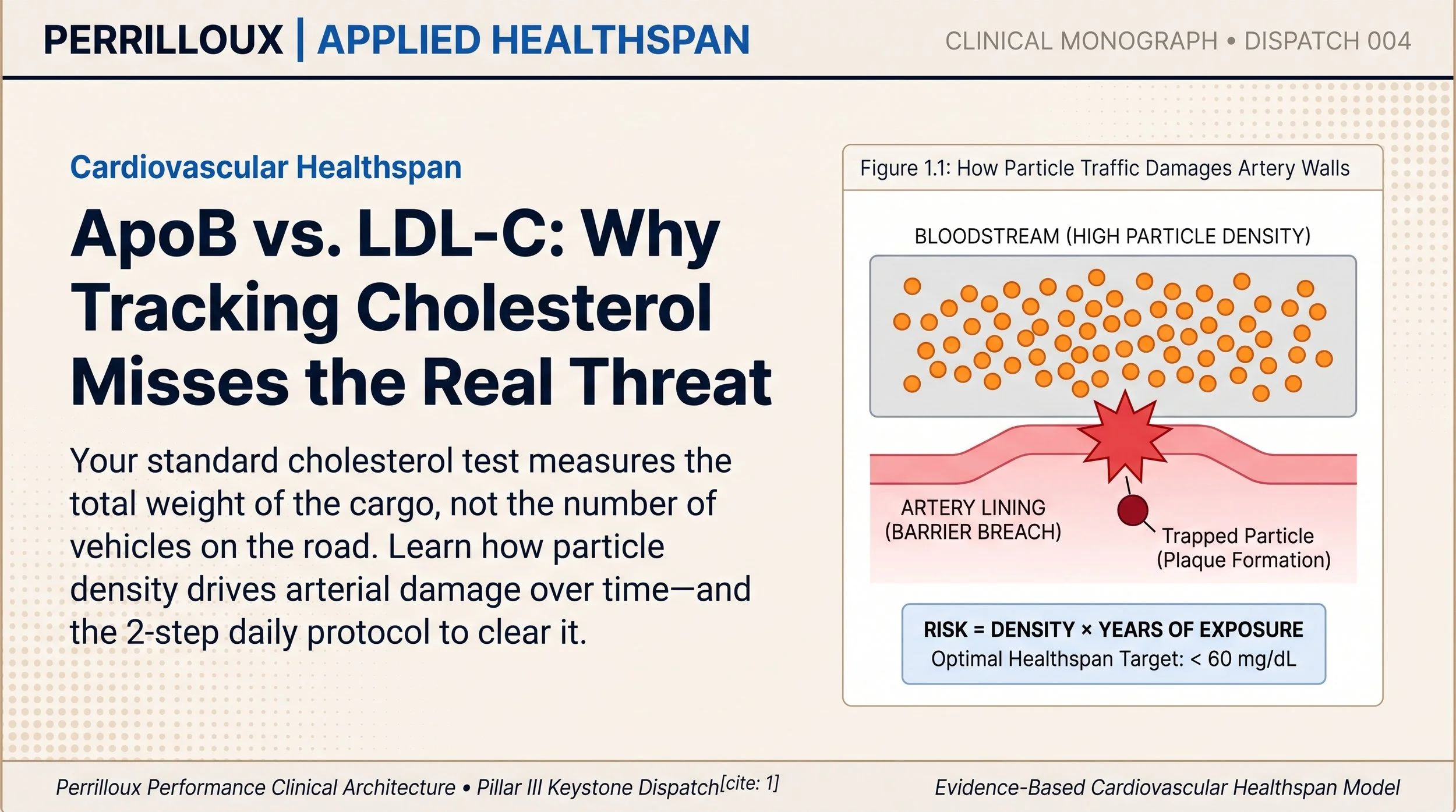
the Particle Problem: Why Your "Normal" Cholesterol Panel is Hiding Your True Cardiovascular Risk
Translating Dr. Allan Sniderman’s Clinical Lipidology Research on Apolipoprotein B, Discordance, and Endothelial Collision Risk.
Author: Darryl M. Perrilloux, CSCS | Executive Director, Perrilloux Performance
Clinical Pillar: Pillar III: Human Performance & Healthspan
Category: Applied Healthspan / Cardiovascular Durability & Lipidology Reading
Time: 7 Minutes
In high-performance environments - whether managing a corporate P&L or pushing for a new personal record on the track - we use telemetry to measure the risk. You don’t operate on a $50 million dollar operating budget using “estimates” for cash flow, however, many high-performing individuals still assess their cardiovascular risk using an outdated, proxy metric: LDL-C.
Standard annual physicals use another lethal proxy metric by assessing the weight of cholesterol (LDL-C) instead of the actual amount of atherogenic particles (ApoB), in addition to assuming they can safely manage their cardiovascular risk as long as their total cholesterol mass is within the acceptable limits. They are at great clinical disadvantage due to the fact that atherosclerosis is not simply a "clogged pipe", but rather an issue of vascular collisions caused by plaque forming along the walls of arteries.
Mechanism of Action: How Do Atherogenic Particles Cause Plaque Formation?
To move the cholesterol in the blood stream, the body has developed packaging mechanisms called lipoproteins. There is one tracking protein located on each and every atherogenic vehicle (i.e., plaque-forming) present in the body whether it be LDL, VLDL, or IDL – all carry Apolipoprotein B (ApoB) as a tracking protein. The current methods of testing, such as the standard LDL-C test weigh the cargo. If you have "one-ton" of cholesterol according to your test results; this does not mean there will be a traffic accident (plaque deposition). What actually causes a traffic accident is not the weight of the cargo itself, but rather how many vehicles carrying said cargo crash into the arterial wall (endothelium).
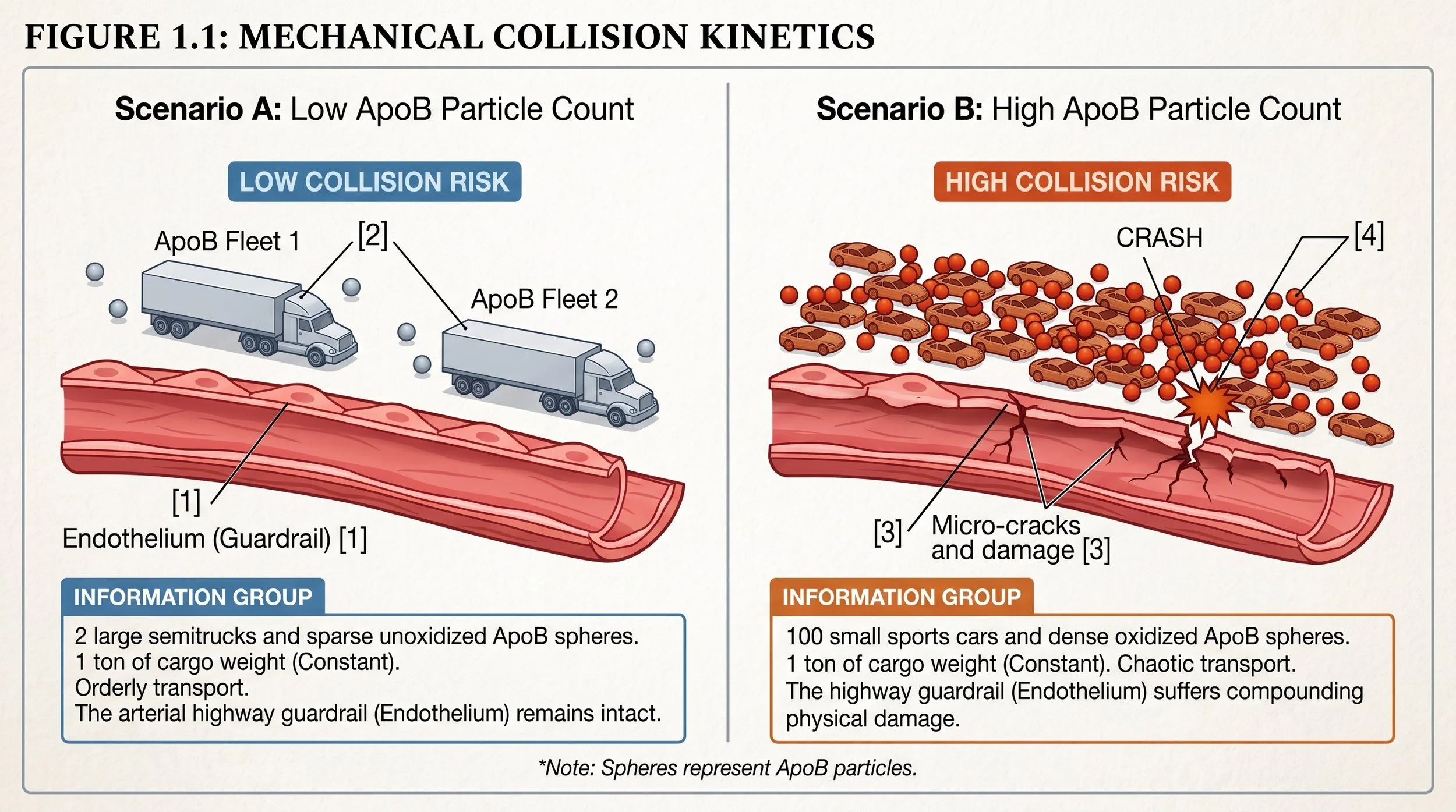
Arterial Wall = Highway:
Consider your artery as a highway.
Scenario A (Low ApoB):
You transport 1 ton of cargo via 2 large semi trucks. Low particle count and therefore low risk of collision.
Scenario B (High ApoB):
You also transport that same ton of cargo via 100 small sports cars. High particle count and therefore high risk of collision
The Clinical & Economic Hazard: The Discordance Trap
Apo B will show an increased crash risk due to higher numbers even if LDL-C shows as normal in comparison. When this happens we call it discordance. And that’s why people with a body that is physically perfect and metabolically active can experience unanticipated heart attacks.
Your standard lipid panel does not identify the difference between these two cases. Your healthcare system has no way of differentiating between the reasons for plaque formation in arteries based upon mass versus particle counts.
The Perrilloux Protocol: Telemetry Translation
Atherosclerosis is a condition resulting from the accumulation of exposures over time. For all diseases of cardiovascular pathology, the clinical outcome is determined by the total area under the curve of the relationship between the concentration of circulating particles and the length of time that the endothelium has been exposed to these particles.
Mechanistic Translation:
The concept of the accumulation of plaque in arterial walls as a result of Atherogenesis should be viewed similarly to how clinicians view cigarette smoke induced lung disease. Rather than simply asking if a patient smokes, they determine the cumulative "pack-years" (the number of packs smoked daily times the number of years that the individual has smoked).
Likewise, every year that an elevated atherogenic particle density continues to collide with the arterial wall will compound and increase the overall degree of damage caused to the arterial wall. Although chronological age cannot be changed, lowering the concentration of circulating atherogenic particles will stop the continued compounding effect of the damage occurring to the arterial wall at once.
1. Laboratory Test Upgrade (The Telemetry Check):
Ask your physician to include an Apolipoprotein B (ApoB) assay with your next blood draw panel, along with your standard lipid profile. Most laboratories (Quest, LabCorp) provide this test for an additional fee of $20-$30 out-of-pocket. Shift from making decisions based upon estimates or proxies (such as LDL-C), to actual enumeration of the amount of particles present in your plasma.
2. Baseline Calibration (The Targets):
Standard Reference Range for ApoB: Less than 90 mg/dL.
Targeted Healthspan Reference Range for ApoB: Less than 60 mg/dL. Medicine 3.0 target was developed to halt plaque progression and limit lifetime endothelial exposure.
3. Dietary Strategy: Cleaning the Roadway
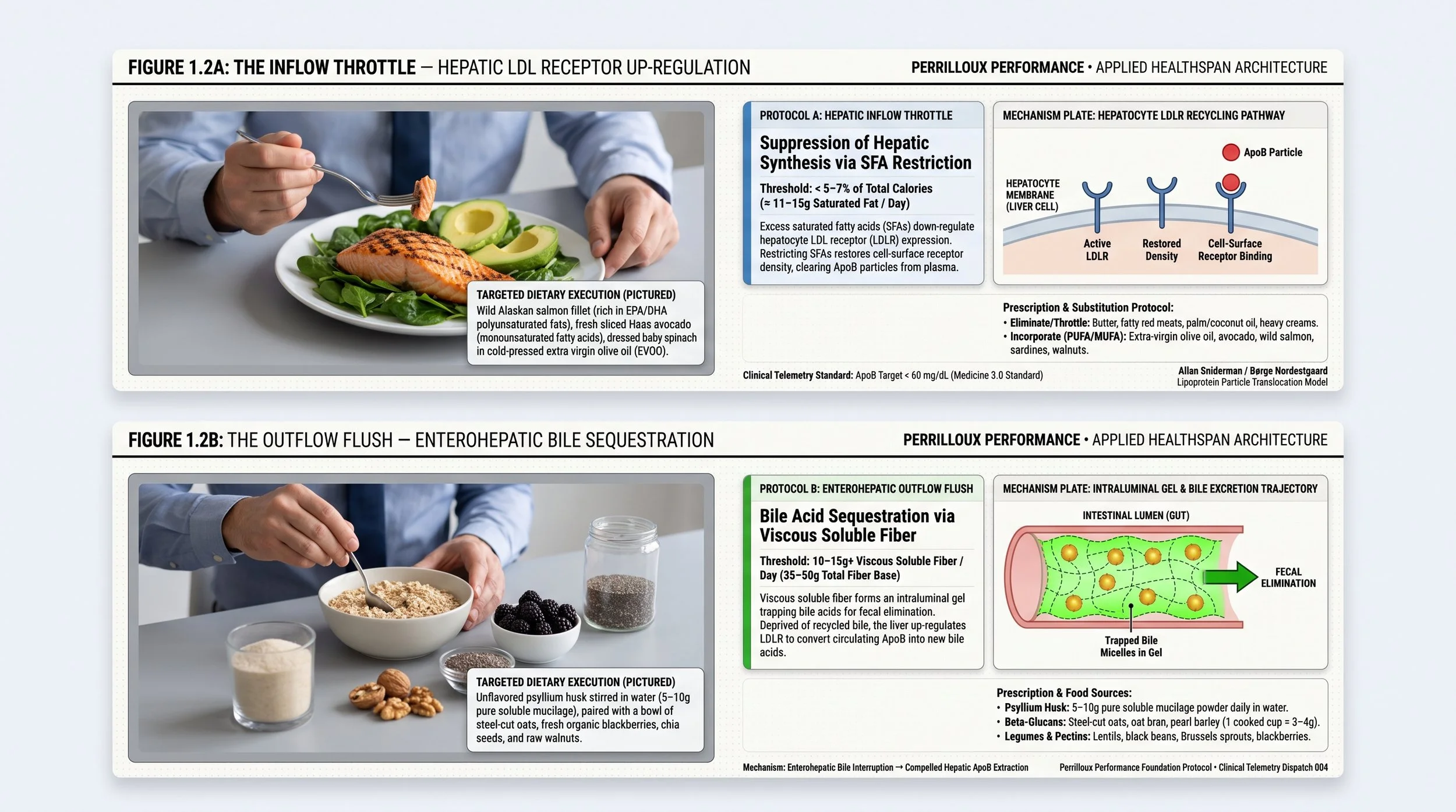
ApoB particle density is responsive to specific dietary interventions. Two main intervention points are identified: suppression of endogenously produced hepatic cholesterol through dietary means and acceleration of hepatic clearance of circulating ApoB particles from the bloodstream.
Protocol A: Suppression of Hepatic Cholesterol Production (Saturated Fatty Acids):
Quantitative Threshold: Limit saturated fatty acid consumption to less than 5-7 % of total calories consumed (approximately 11-15 g saturated fat/day on a standard 2000 calorie diet).
Biologic Mechanism: Elevated levels of saturated fat suppress hepatic LDL receptor expression. As such, excess saturated fat prevents the body from clearing apob-containing lipoproteins through the hepatocyte-mediated removal process.
Substitution Protocol: Replace butter, high fat red meats, whole milk dairy products, cream and tropical oils (coconut/oil palm oil) with mono-unsaturated fatty acids (e.g., extra-virgin olive oil/avocado) and poly-unsaturated omega-3 fatty acid patterns.
Protocol B: Enhancing Clearance Through Bile Acid Sequestration (Viscous Soluble Fiber):
Structural vs. Functional Distinctions:
Insoluble fiber (celery/plant cellulose/wheat bran) does not remove lipids from the gut; rather, insoluble fibers add bulk to promote GI motility.
Viscous soluble fibers form a gel matrix within the intestinal lumen that captures cholesterol-rich bile acids and thereby prevents re-absorption into the enterohepatic circulation, causing them to be removed through feces. Since bile acids are removed from the body, the liver is stimulated to produce more LDL-receptors to pull remaining ApoB-containing lipoproteins from the plasma to use in producing new bile acids.
Quantitative Threshold: Consume a minimum of 10-15+ grams of viscous soluble fiber per day (on a total fiber base line of 35-50 grams per day).
Key Food Sources for Viscous Soluble Fiber:
• Psyllium Husk (5-10gps/day) — primary bile acid sequestering agent.
• Beta-Glucans (Steel Cut Oats / Barley) — one cooked cup delivers 3-4 grams of beta glucans.
• Legumes — lentils, black beans and kidney beans contain 4-5 grams soluble fiber/cup cooked.
• Pectin Rich Foods — brussels sprouts, avocado, apple and dark berry fruits
The Frontier: Active Clinical Research
PCSK9 Inhibitors (Monoclonal Antibodies): PCSK9 monoclonal antibodies, including Repatha (evolocumab) and Praluent (alirocumab) have become standard treatments for individuals with hyperlipidemia who require lowering of their cholesterol levels. These medications are given subcutaneously approximately every 2-4 weeks. As they bind to circulating PCSK9 molecules these drugs prevent PCSK9's binding to low-density lipoprotein receptor on the liver. Thus, low-density lipoprotein receptors continue to recycle back to the surface of the hepatocyte, allowing them to continuously remove apob-containing lipids from the circulation.
siRNA Therapies (Gene-Silencing): Unlike PCSK9 inhibitors which target circulating proteins in the blood stream; siRNA therapeutics work by silencing mRNA in cells producing PCSK9. Inclisiran (Leqvio) has been approved by the Food and Drug Administration (FDA) for selective mRNA silencing within hepatocytes to decrease PCSK9 protein synthesis. Inclisiran, after receiving two dose administration at Day 0 and Month 3, only requires once or twice yearly dosing, thus incorporating the ability to provide compliance through its treatment regimen.
Advanced Lipid-Lowering Modalities At-A-Glance
| Therapeutic Class | Core Mechanism | Target Particle | Dosing Interval | Clinical Status |
|---|---|---|---|---|
| PCSK9 Inhibitors (Monoclonal Antibodies) | Binds & neutralizes extracellular, circulating PCSK9 proteins | ApoB / LDL | Every 2 to 4 weeks | FDA Approved First-line or adjunct |
| siRNA Therapeutics (Direct Gene Silencing) | Degrades intracellular PCSK9 mRNA inside hepatocytes | ApoB / LDL | Twice yearly (After loading doses) |
FDA Approved First-line or adjunct |
| Lp(a) Disrupters (ASOs & Emerging siRNAs) | Silences apolipoprotein(a) mRNA production | Lp(a) | Monthly or quarterly | Phase 3 Trials Pelacarsen missed MACE |
Lp(a) Disrupters (Antisense Oligonucleotides & Emerging siRNAs): Lipoprotein(a) is an independent, genetically determined LDL-like particle containing a molecule of apolipoprotein(a) covalently bound to apolipoprotein B-100 that lifestyle interventions cannot modulate. The therapeutic landscape recently absorbed a major clinical trial milestone: Novartis reported that while the antisense oligonucleotide pelacarsen significantly reduced circulating Lp(a) levels, it did not achieve a statistically significant reduction in major adverse cardiovascular events (MACE) in the Phase 3 Lp(a)HORIZON study. The investigational frontier now pivots to next-generation siRNA therapies (such as olpasiran, zerlasiran, and lepodisiran) to determine whether deeper, more sustained Lp(a) suppression can demonstrate definitive cardiovascular event reduction in ongoing Phase 3 cardiovascular outcome trials.
APPENDIX: THE CLINICAL EVIDENCE BASE
In this issue we take peer-reviewed lipidology, cardiology, and modern clinical endpoints and translate them into practice protocols.
Physiological design of this issue is based on primary clinical data:
Clinical Data: The clinical data clearly show how Dr. Sniderman's work has shown that ApoB (Particle Number) is a better and more effective measure to determine cardiovascular risk versus LDL-C. When there is a disconnect in patient profiles (i.e., LDL-C is within the "normal" range yet ApoB levels are elevated), the results demonstrate that the cardiovascular risk is strictly based on the number of ApoB particles and not the total amount of cholesterol.
Translation Architecture: Perrilloux Performance translates this by equipping clients to reject legacy LDL-C targets during their executive physicals. We architect a proactive prevention strategy where the client is coached to mandate a direct ApoB assay from their physician. This shifts their healthcare team's focus toward mitigating the mechanical cause of endothelial collisions long before macroscopic plaque can form.
Clinical Data: Mendelian randomization studies have shown that the association between LDL particle levels with Cardiovascular Disease Risk can be attributed to the Total Duration of Exposure in addition to the Magnitude of Exposure.
Translation architecture: Perrilloux Performance counteracts this with acting as the strategic bridge between their high-performing client and medical team. We provide the targeted nutritional protocols to accelerate lipid clearance in our clients, and we give them the clinical data that they will need to advocate for early intervention pharmacotherapy with their physician. By driving ApoB suppression decades earlier than standard practice, we protect biological structural integrity by reducing the integral of exposure over time.
The Bottom Line for High-Performing Professionals & Elite Athletes
Cardiovascular durability represents much more than longevity - it provides the bioenergetic infrastructure that supports elite performance.
The Professional: Endothelial health is directly tied to microvascular circulation in the brain. High ApoB burdens compromise cerebral blood flow over time, slowly degrading executive cognitive stamina, memory retention, and autonomic regulation. Controlling particle count protects the biological hardware required for high-dimensional decision-making.
The Elite Athlete: While athletes possess exceptional cardiovascular output, high-intensity training cannot outwork genetic lipid discordance. Plaque rupture during maximum cardiac exertion is a silent, lethal threat. Precise ApoB telemetry ensures that the engine is not just powerful, but structurally sound at redline RPMs.
You cannot allow the medical community to manage your risk using an analog scale when high-definition particle tracking is available. Demand structural accountability: count the particles, control the risk, and preserve your healthspan.
PERRILLOUX PERFORMANCE: CLINICAL ARCHITECTURE
This dispatch represents an active operational module within the Five Core Pillars of the Perrilloux Performance clinical architecture—an evidence-based framework for applied healthspan and human performance.
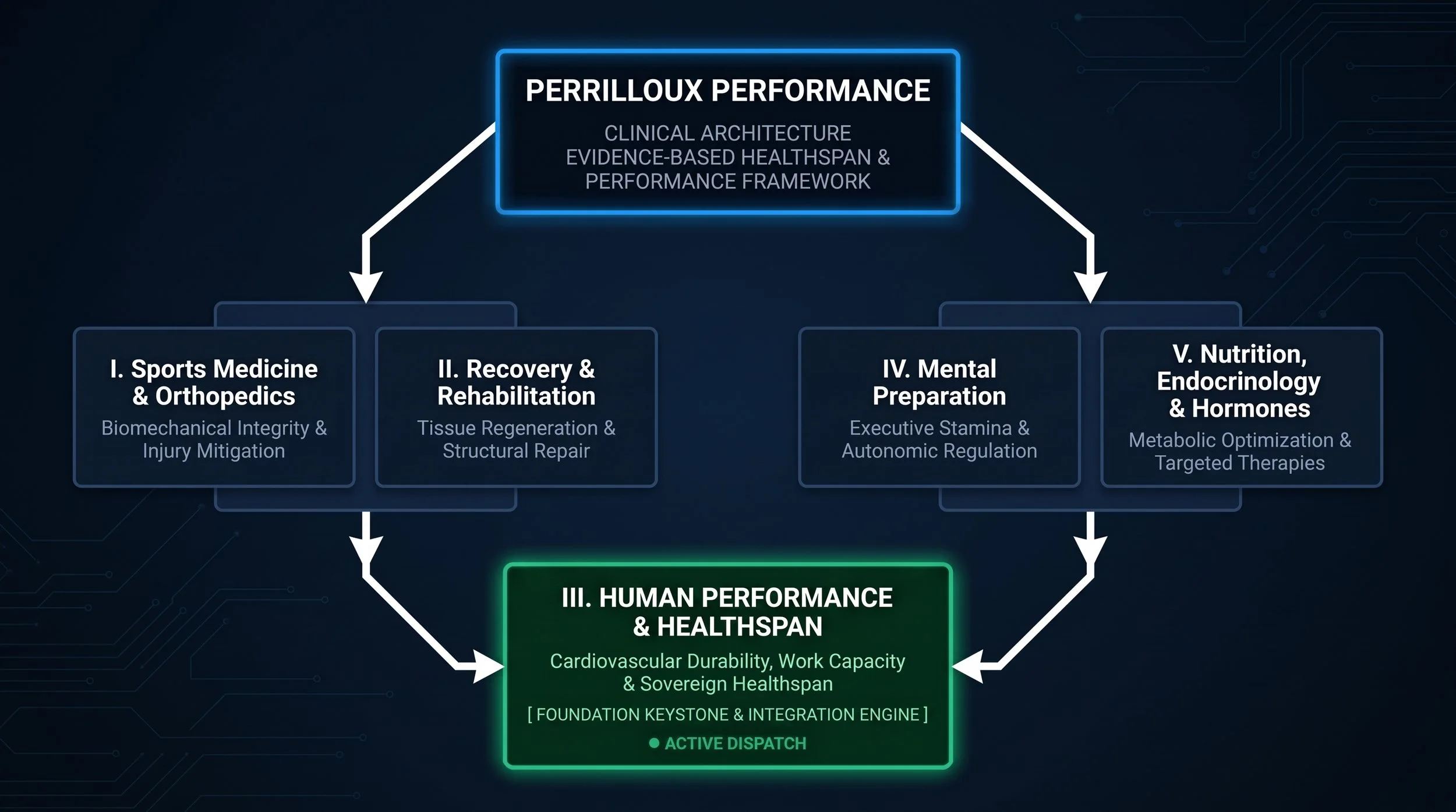
[ ] I. Sports Medicine & Orthopedics (Biomechanical integrity & injury mitigation)
[ ] II. Recovery & Rehabilitation (Tissue regeneration & structural repair)
[X] III. Human Performance & Healthspan (Cardiovascular durability & bioenergetics)
[ ] IV. Mental Preparation (Executive cognitive stamina & autonomic regulation)
[ ] V. Nutrition, Endocrinology & Hormones (Metabolic optimization & targeted clinical therapies)
Perrilloux: Applied Healthspan delivers weekly clinical analysis and health systems intelligence.