Author: Darryl M. Perrilloux, CSCS | Executive Director, Perrilloux Performance
Clinical Pillar: Pillar V: Nutrition, Endocrinology & Hormones
Category: Applied Healthspan / Translational Endocrinology & Muscle Proteostasis
Reading Time: 7 Minutes
Translating Dr. Gerald Shulman’s Cellular Metabolic Research on Insulin Sensitivity, Intracellular mTOR Activation, and Emerging Phase 2b Trials on Sarcopenic Countermeasures.
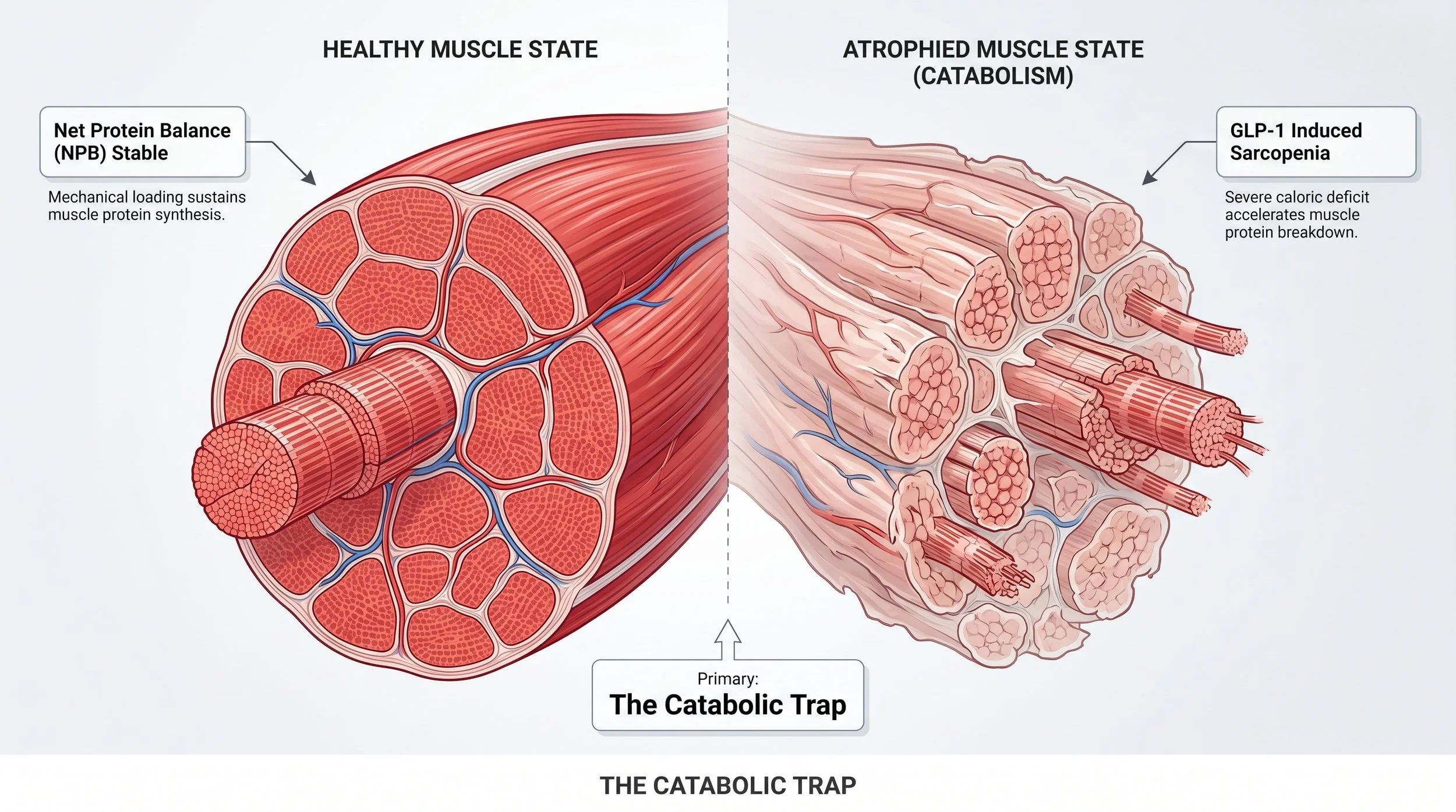
A major part of the modern commercial landscape surrounding longevity and weight management relies heavily on pharmaceuticals — specifically, glucagon like peptide 1 (GLP-1) receptor agonists. It is clear that these peptides have shown significant clinical evidence for their ability to reduce the amount of adipose tissue within a patient. However, simply viewing weight loss as an absolute decrease in the patient's overall mass is a grave clinical oversight. When a patient loses weight rapidly without the use of specific mechanical loading or bioenergetics to track the changes occurring with weight loss, the patient not only loses visceral fat but suffers from extreme catabolic states of lean tissue loss as well.
Mechanism of Action: How does GLP-1 work?
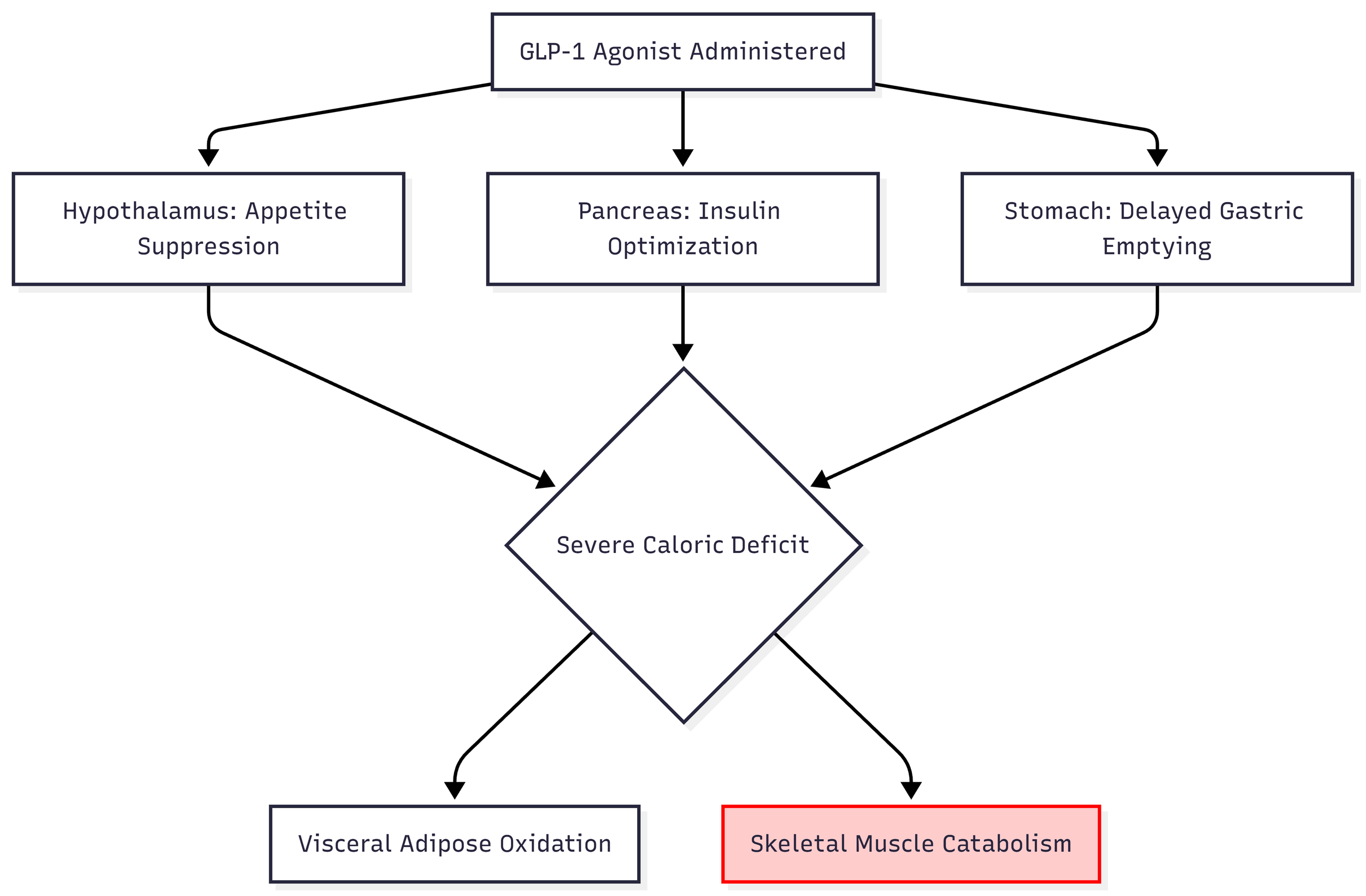
GLP-1 is a hormone produced by the intestine, which has been identified as an incretin hormone. Pharmaceutical GLP-1 agonist medications (i.e. Semaglutide, Tirzepatide), stimulate these intestinal receptors at an increased rate than what would normally occur through natural processes. This stimulation elicits a triad of physiological responses:
Pancreas: increases glucose dependent insulin release, decreases glucagon levels
Stomach: causes delayed gastric emptying; the stomach remains filled for longer periods of time
Hypothalamic: stimulates the brain to suppress appetite
The combination of effects results in a clinically significant, prolonged caloric restriction. However, the body cannot differentiate between different forms of tissue when it is subjected to rapid energy mobilization.
The Clinical & Economic Hazard: The Catabolic Trap
Skeletal Muscle is More Than Just a Locomotor Tissue — It Is the Body’s Main Glucose Sink as Well as Its Basal Metabolic Rate Engine.
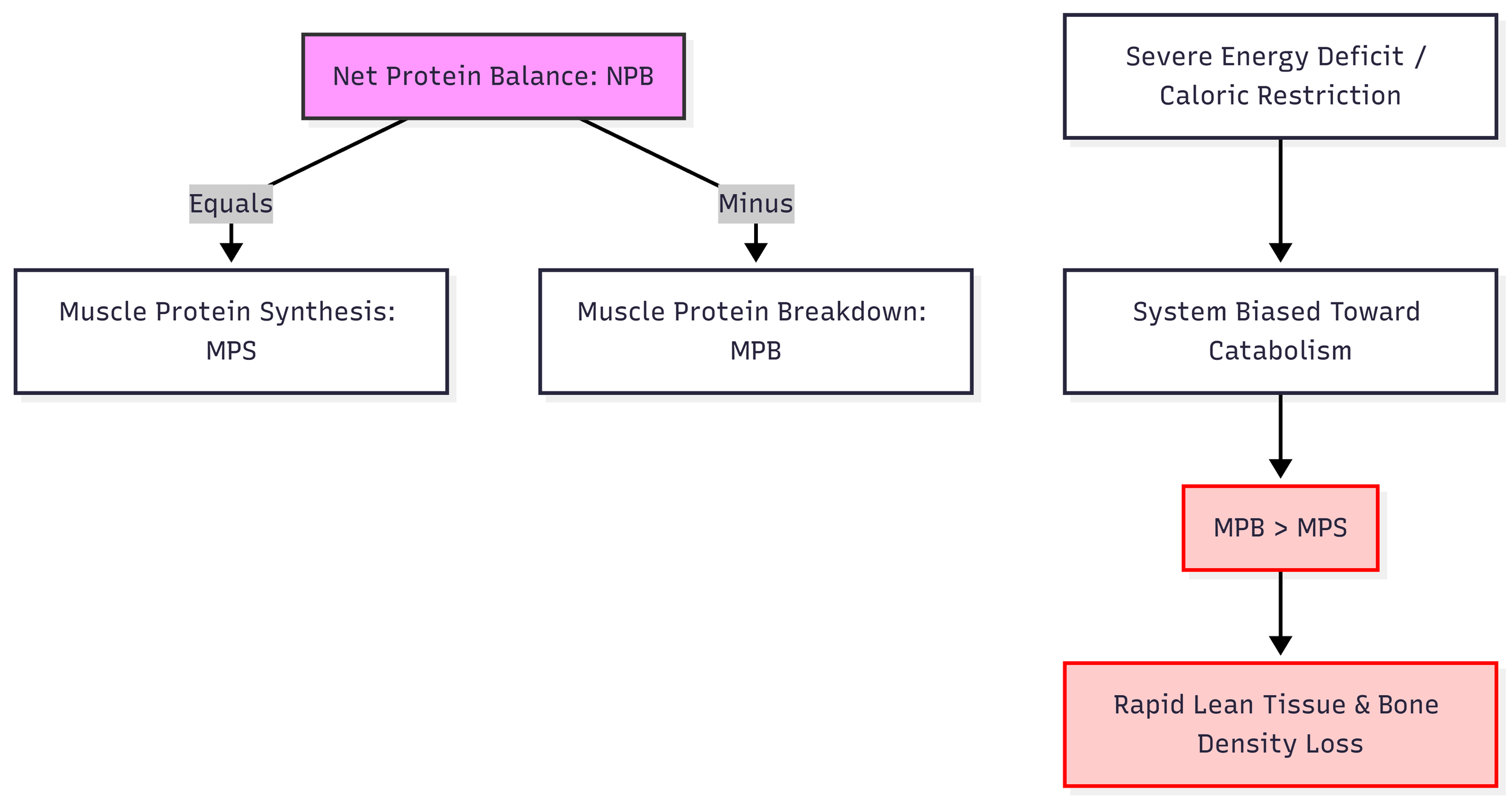
When you are aggressively titrating GLP-1 peptides clinically, studies have shown that you may lose up to 30 percent to 40 percent of your total mass loss as lean muscle mass and bone mineral density. This is governed by the Physiological Flow Chart:
The Perrilloux Protocol: Mechanical Translation
Optimization of metabolic function can't happen in isolation; it must also be linked with high-threshold resistance training signals to the CNS to protect lean mass when caloric deficits occur. In other words, we are attempting to destroy Visceral Adipose Tissue as much as possible while preserving Skeletal Muscle Mass (SMM).
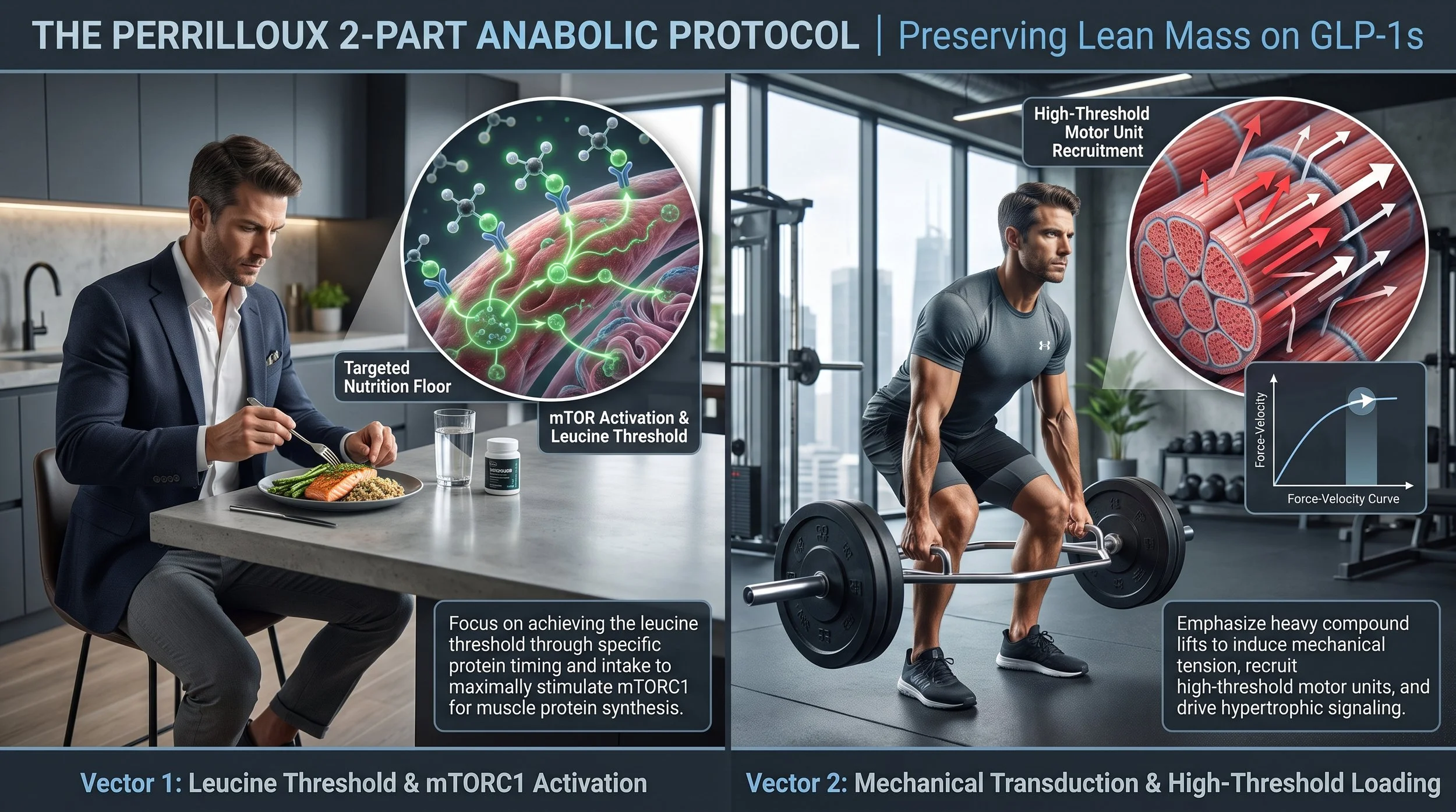
1. Nutritional Strategy (mTOR Stimulation):
Restricting calories will naturally decrease mTOR activity (the principle anabolic drive for muscle growth). To prevent this, we need our patients to take at least 1.6 – 2.2 g protein/kg of target body weight. Each major meal needs to provide > 3g leucine to induce MPS (muscle protein synthesis) through manual stimulation of the mTOR pathway.
2. Mechanotransduction (Force-Induced Resistance Training):
Exercise via Cardiovascular Stress does not maintain muscle mass in a caloric deficient state. The body is a system that needs mechanical stress/force. We highly recommend High Threshold Motor Unit Recruitment: 2-3 times per week of compound Multi-Joint Resistance Exercise performed within 90% of failure on a weekly basis. This creates the Biological “Signal” that the CNS recognizes as important to preserve muscle mass and therefore, should not be broken down for energy production.
The Frontier: Active Clinical Research
Biotech companies are investing billions to engineer drugs that preserve muscle tissue—addressing the exact problem that structured resistance training and precision nutrition have handled for decades.
Myostatin & Activin Inhibitors: Bimagrumab (an activin receptor type II antibody) is an example of agents evaluated in Phase 2b trials, where clinical results demonstrate that it stimulates adipose reduction while preserving or increasing lean body mass, directly countering the catabolic muscle loss associated with GLP-1 therapy.
Combination Therapies: Major developers like Eli Lilly and Novo Nordisk are advancing combination pipelines that pair incretin therapies with muscle-preserving candidates—such as the selective androgen receptor modulator (SARM) enobosarm from Veru Inc.—to establish dual-pathway, body-composition-sparing strategies.
Analysis of STEP Trials: Ongoing review of DEXA body composition data from the STEP (Semaglutide Treatment Effect in People with Obesity) trials has confirmed that a significant fraction of rapid weight loss comprises lean tissue. Consequently, both a Structured Lifestyle Intervention and an ongoing Resistance Training Program remain clinically mandatory for preserving physical function, metabolic rate, and long-term treatment success.
| Drug Candidate & Mechanism | Trial Name & Design | Total Weight Loss | Fat Mass vs. Lean Mass Impact |
|---|---|---|---|
|
Bimagrumab + Semaglutide ActRIIA/IIB Monoclonal Antibody |
Phase 2b BELIEVE Trial ↗ 72 Weeks, Adults with Obesity (NCT05616013) |
−22.1% avg |
• 92.8% of weight loss derived strictly from fat. • Semaglutide alone led to 7.9% lean loss; combination reduced it to 2.6%. • Bimagrumab monotherapy showed +2.5% lean mass increase. |
|
Enobosarm + Semaglutide Selective Androgen Receptor Modulator (SARM) |
Phase 2b QUALITY Study ↗ 16 Wk active + 12 Wk maint, Age ≥60 |
~−4.5 kg avg |
• 71% relative reduction in lean mass loss (p = 0.002) vs. semaglutide monotherapy. • Upon cessation, enobosarm maintenance prevented weight regain by 46% and preserved 100% of lean mass. |
|
Trevogrumab + Semaglutide Anti-GDF8 / Anti-Myostatin Antibody |
Phase 2 COURAGE Trial ↗ 26 Weeks, Adults with Obesity (NCT06299098) |
Incremental drop |
• Semaglutide monotherapy lost ~35% of total weight as lean mass. • Adding trevogrumab prevented 50%–80% of lean mass loss while accelerating total adipose reduction. |
|
Semaglutide Alone (Benchmark) GLP-1 Receptor Agonist |
STEP-1 DEXA Substudy ↗ 68 Weeks, Adults with Obesity (Wilding et al.) |
−14.9% total |
• ~34% to 40% of all lost weight was lean body mass. • Confirms the clinical requirement for structured mechanical loading and resistance protocols to counter sarcopenic decline. |
APPENDIX: THE CLINICAL EVIDENCE BASE
In this issue we take peer-reviewed metabolic medicine, cellular endocrinology, and modern Phase 2/3 clinical trials' endpoints and translate them into practice protocols.
Physiological design of this issue is based on primary clinical data:
Clinical data: Dr. Shulman's molecular studies conducted at Yale University demonstrate that skeletal muscle is the major site for insulin mediated glucose removal from blood throughout the body and removes approximately 80% of all glucose cleared from the bloodstream after meals. The presence of ectopic lipid in muscle cells (intramyocellular lipids) blocks normal insulin function and therefore prevents normal glycogen formation in these cells.
Translation architecture: Perrilloux Performance translates this cell-based biology by recognizing that skeletal muscle has two roles. It acts as locomotor tissue. In addition to its role in movement it functions as a critical metabolic sink. Therefore, protecting skeletal muscle when reducing calories is crucial if you want to maintain your ability to be metabolically flexible over time and prevent rebounded insulin resistance.
Clinical data: Telemetry via dual energy x ray absorptiometry (DEXA) substudy showed that although semaglutide produced a mean total body weight loss of 14.9%, lean body mass represented only 34% to 40% of the total body weight loss in subjects who did not follow structured resistance training programs.
Translation architecture: Perrilloux Performance will counteract this catabolic trap using specific resistance loading patterns to overcome system-wide catabolism, specifically through high threshold compound loading in conjunction with the application of the Leucine Threshold protocol (>3 grams per meal) to induce mTORC1 phosphorylation and thus activate intramuscular protein synthesis.
The Bottom Line for High-Performing Professionals & Elite Athletes
Skeletal muscle mass and metabolic resilience represent much more than just vanity - they provide essential function and support life.
Regardless of whether you are juggling multiple daily tasks with demanding working hours or building in the gym and on the playing field as an elite athlete, your lean tissue represents both your primary metabolic engine and structural shield.
While you may lose a significant amount of weight using GLP-1 monotherapy to suppress hunger (uncoupling) without structured resistance training, while you see a decrease in weight on the scale, there will be a significant "functional cost" associated with losing this weight: approximately 40% of the weight lost is from catabolic breakdown of the muscle and connective tissue to use for fuel.
The Professional: The skeletal muscle has a major role in clearing excess glucose after a meal by handling about 80%. Reducing your lean body mass reduces your functional metabolic reserve. This reduction can cause increased insulin resistance when calories are returned to diet. A reduced resting metabolic rate and irregular energy crashes during the day also result.
The Elite Athlete: Losing lean body mass directly results in a decrease in your power-to-weight ratio and therefore negatively impacts your ability to generate rapid force (rate of force development). This also increases joint and ligament stress thereby increasing the potential for injuries to occur during competition.
You cannot allow the medical community to focus solely on the fact that you have lost weight while your physical capacity is declining. Request structural accountability in any weight loss program: structure each program around a target protein intake, ensure sufficient leucine ingestion at strategic points throughout the day and ensure mechanical resistance loads are included to preserve your athletic performance and enhance your long-term healthspan.
PERRILLOUX PERFORMANCE: CLINICAL ARCHITECTURE
This dispatch represents an active operational module within the Five Core Pillars of the Perrilloux Performance clinical architecture—an evidence-based framework for applied healthspan and human performance.
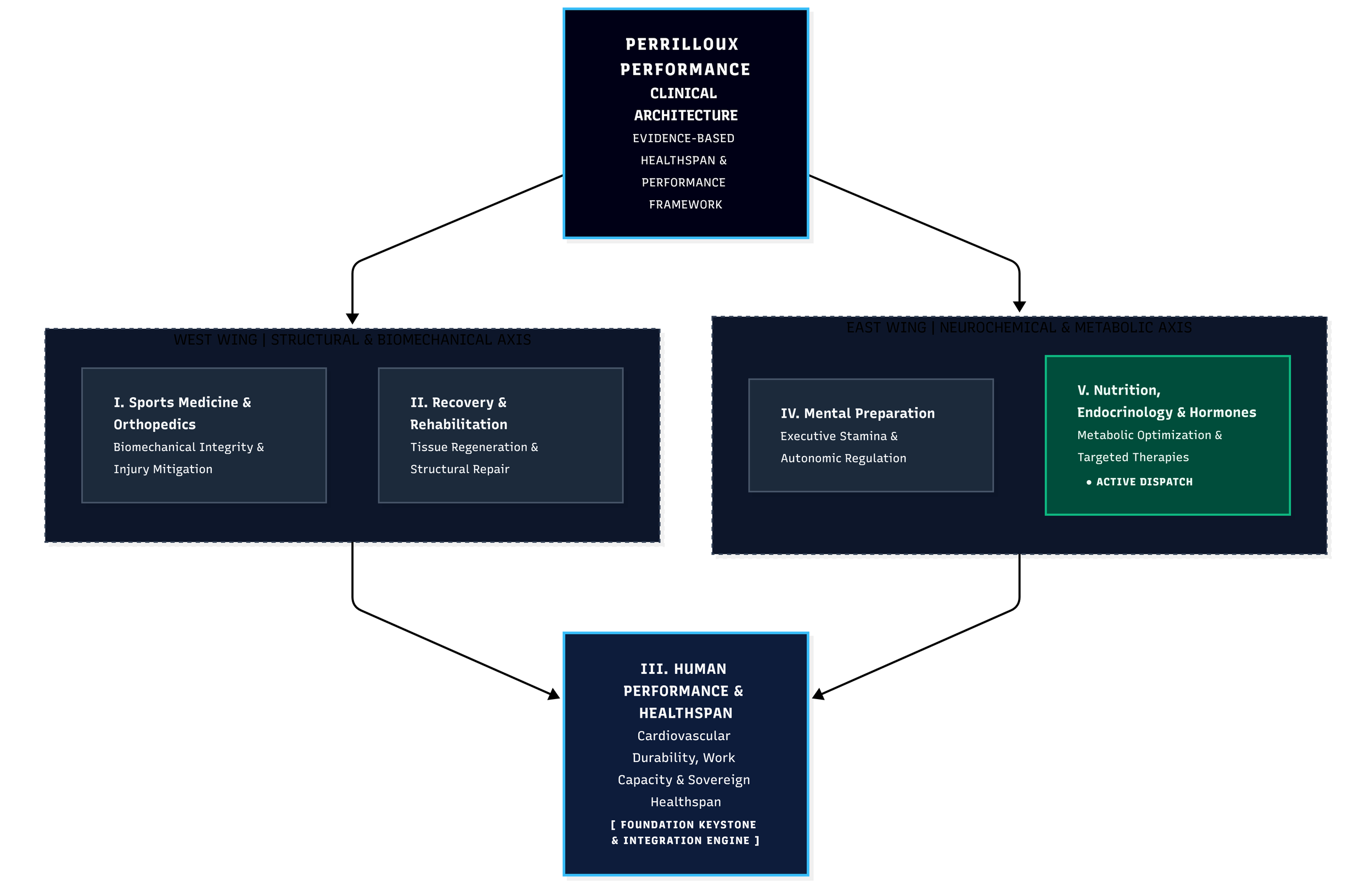
[ ] I. Sports Medicine & Orthopedics (Biomechanical integrity & injury mitigation)
[ ] II. Recovery & Rehabilitation (Tissue regeneration & structural repair)
[ ] III. Human Performance & Healthspan (Cardiovascular durability & bioenergetics)
[ ] IV. Mental Preparation (Executive cognitive stamina & autonomic regulation)
[X] V. Nutrition, Endocrinology & Hormones (Metabolic optimization & targeted clinical therapies)
Perrilloux: Applied Healthspan delivers weekly clinical analysis and health systems intelligence.